Day331: Merzouga “Ephemeral Geometry”
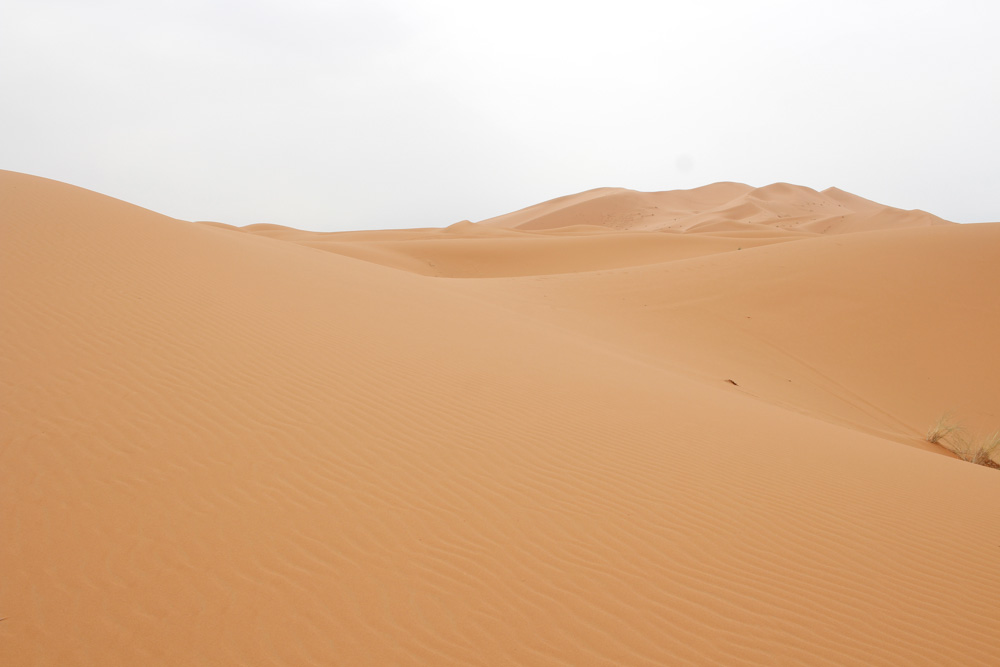
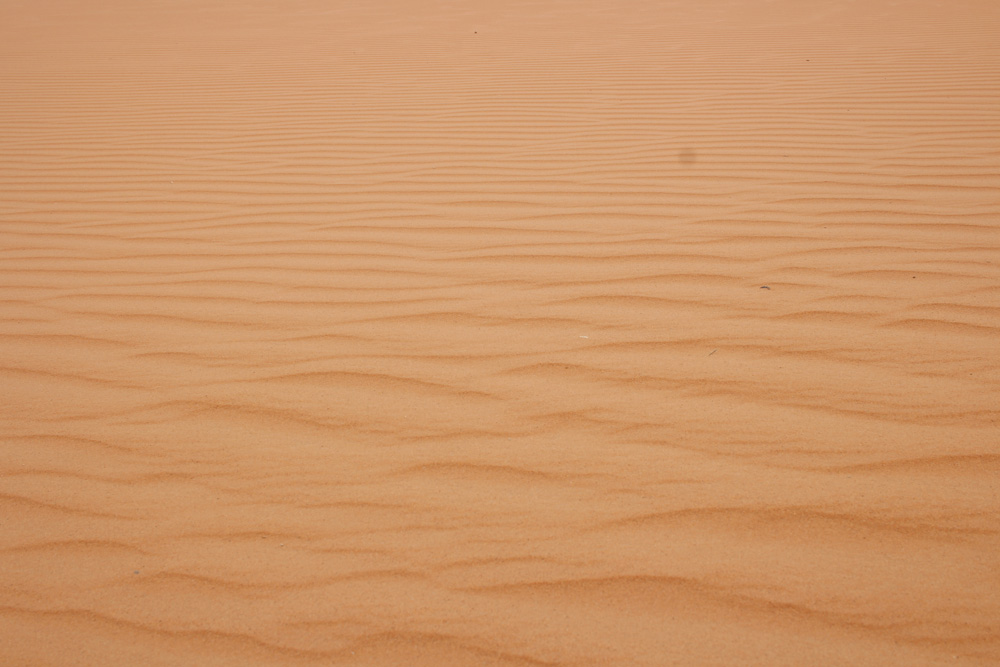
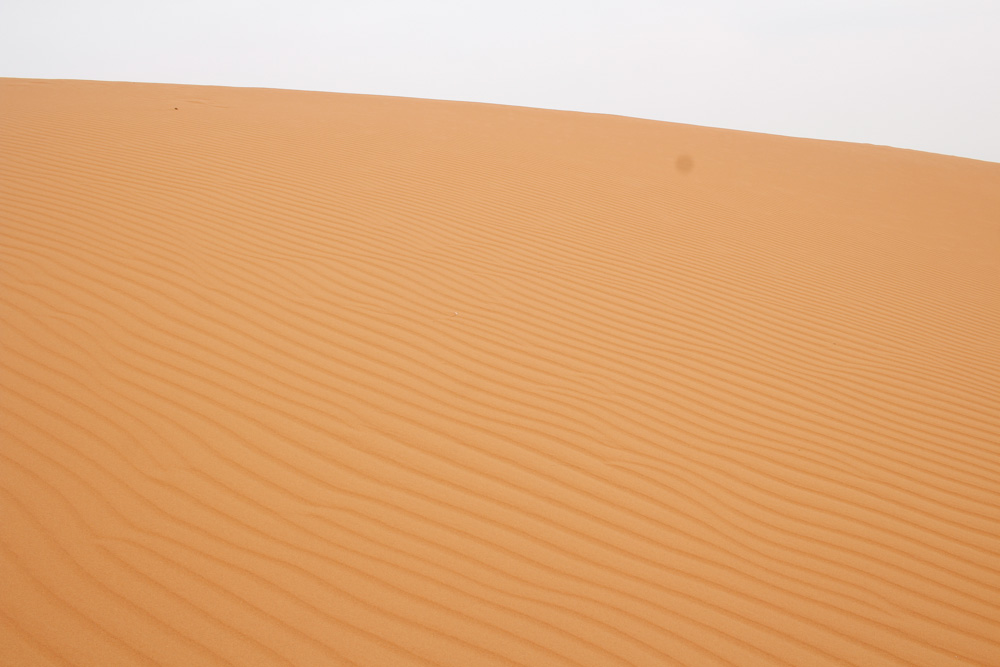
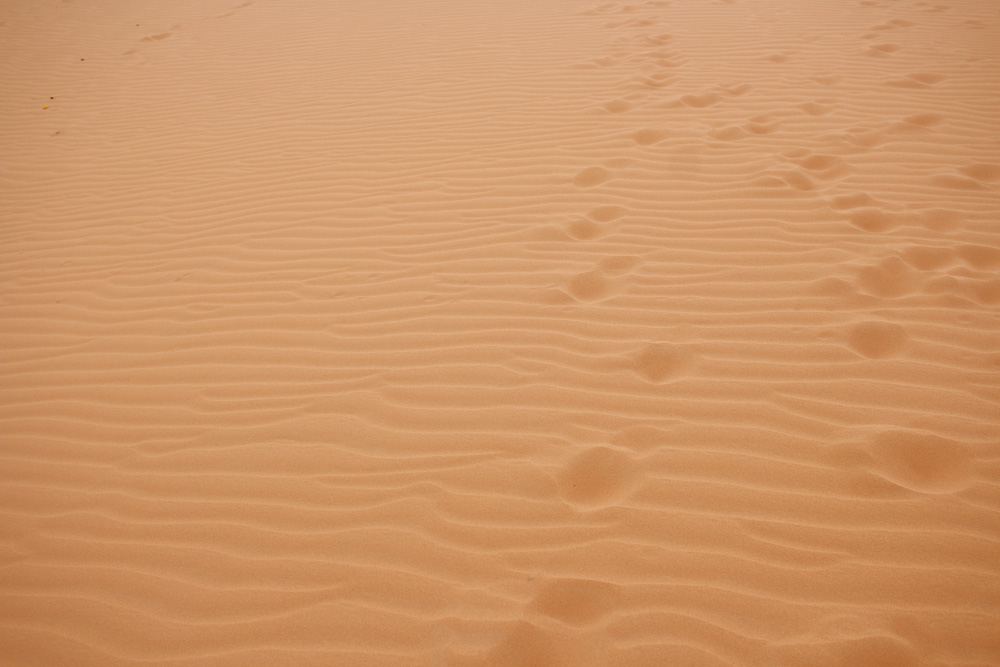
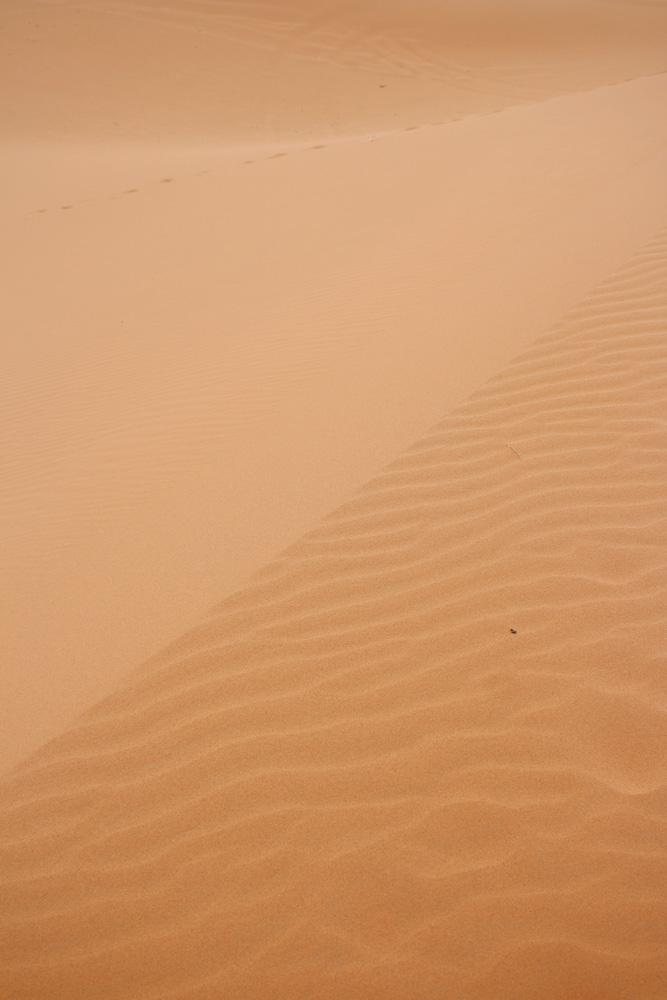
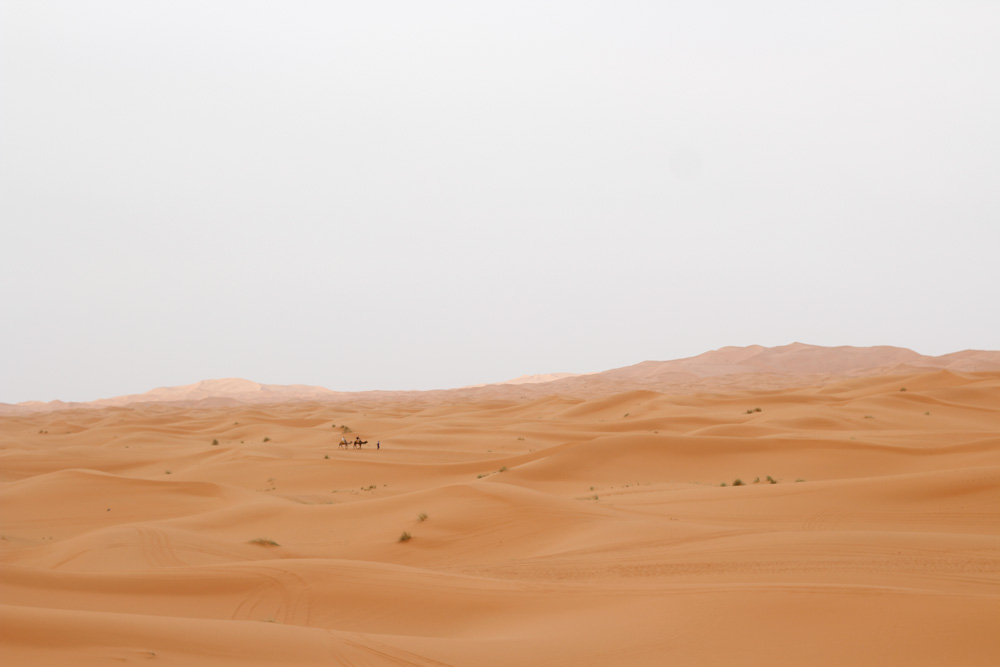
The patterns drawn by the wind in the desert are called sand ripples.They are shaped by many factors — the angle of the ground, the angle and intensity of light, the strength and direction of the wind, the topography, the quality of the sand, the hardness of the surface, and the humidity. Each combination produces a different pattern. Footprints and tire tracks are eventually covered as sand is carried from elsewhere, and before long the ripples quietly reappear. It is a landscape made possible by extremely fine grains of sand and a dry climate. Near the crest of a dune, where the slope becomes steep, the sand slips beyond a certain angle, forming cliff-like faces that create sharp edges in the pattern. At a certain distance, the ripples disappear from view altogether, dissolved by a visual assimilation effect. The ridgelines draw gentle curves and extend in layers toward the horizon. Many forms in nature are the result of long spans of time. Here, however, the instant patterns and formations drawn by the wind change freely and continuously — their interactive quality is what makes them so fascinating. All I could hear was the sound of the wind and my own footsteps. Occasionally, the persistent buzz of flies and the low engine noise of tourist buggies drifted across the dunes. I spent half a day slowly observing the three-dimensional forms shaped by sand and wind.
砂漠で見られる風の描く文様を風紋と言う。地面の角度、光の角度、強さ、風の強さや方向、地形、砂の質、地面の硬さ、湿度などさまざまな要素が影響して描かれる文様はさまざまだ。足跡や車の轍も時間が経つとまたどこかから砂が運ばれ、いつしか文様が姿を現す。砂の粒がとても細かく乾燥した気候だから見られる風景だ。砂山の頂上付近の傾斜の大きいところではある角度を境に砂が流されて崖のようになって文様のエッジができていたり、ある距離を境に風紋は視覚の同化現象によって目に見えなくなったり。稜線はなだらかな曲線を描き、さらに奥にいくつも連なっていく。自然の造形の多くは長い年月を経て生み出された結果だが、ここの風の描く即席のパターンと造形はとても自由に形を変え、インタラクティブなのが面白い。聞こえるのは風の音と自分の足音。時折しつこくまとわりつくハエの羽音と観光客を乗せたバギーの低いエンジン音。砂と風の作り出す立体的造形を眺めてゆっくりと半日を過ごした。