Day318: Coimbra “More Than Crossing”
I had planned to write about the University of Coimbra, a UNESCO World Heritage site, and a pavilion designed by Álvaro Siza, but when I walked down toward the river, I noticed that the bridges sat unusually low above the water.
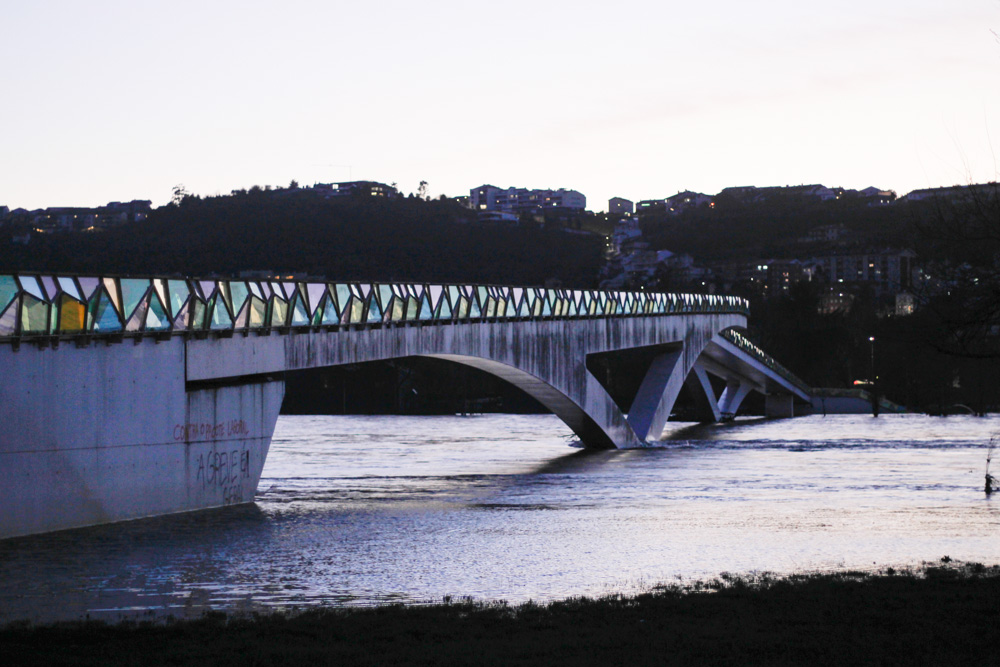
Due to heavy rainfall, the river had swollen dramatically. Some riverside restaurants were flooded, trees along the banks had collapsed, and the painful traces of the disaster remained. Another traveler I met at my accommodation told me that the express train to Lisbon I had planned to take was also suspended.
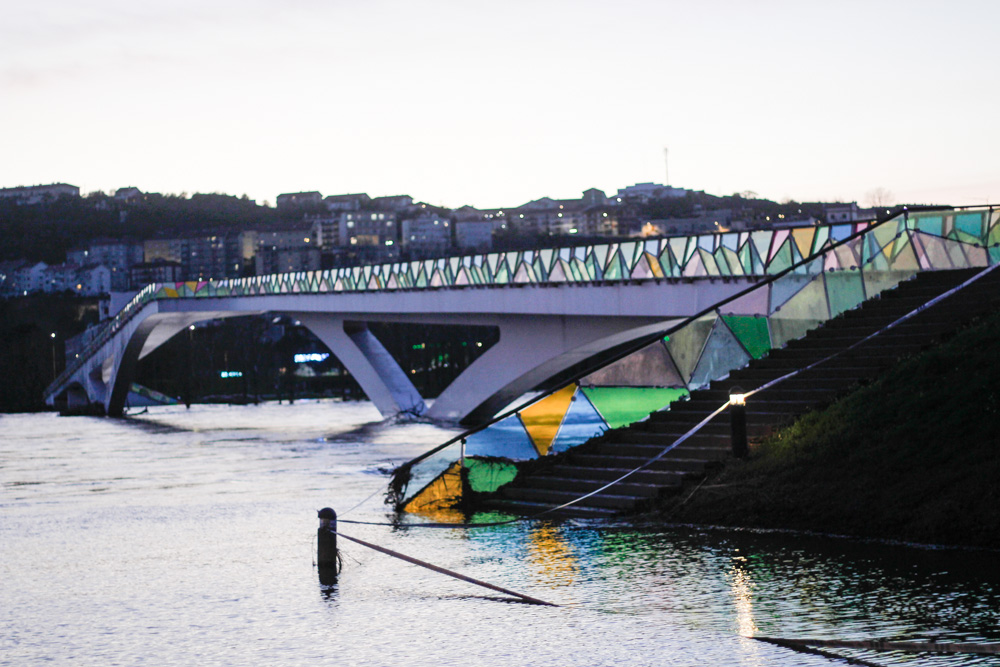
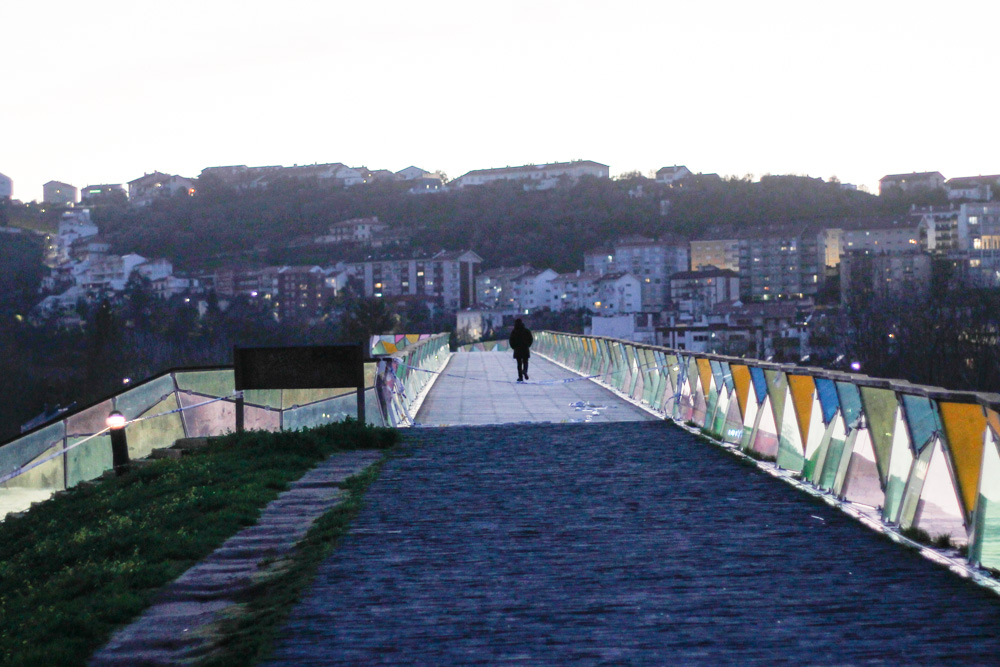
In the middle of that river stood an intriguing pedestrian bridge. Pedestrian bridges often feel vulnerable to flooding, yet this one, designed by a structural engineer, was completely unmoved. Two offset cantilevers make the bridge appear disconnected, and where they overlap at the center, a plaza-like space is created. The concept, I learned, came from the idea that it would be a waste to treat a bridge merely as a tool for crossing a river.
世界遺産にもなっているコインブラ大学やアルヴァロ・シザ設計のパビリオンなどを記事にしようと思い見てきたのだが、川の方へ行ってみると橋が水面からあまり高くないことに気づいた。
集中豪雨の影響で川がかなり増水しており、浸水しているレストランがあったり、川沿いの木々が倒れていたりと、痛々しい爪痕が残っていた。宿で会った他の旅行者に聞くと、乗ろうと思っていたリスボン行きの急行列車も止まっているらしい。
その川の中に、歩行者専用の面白い橋があった。歩行者専用の橋は流されやすいイメージがあるが、さすが構造家の橋だけあってびくともしていない。二つのずれた片持ち梁によって橋が繋がっていないように見え、それらが重なる中心部には広場のような場所がつくられていた。橋を単に川を渡るためだけの道具にするのはもったいない、という発想から生まれたデザインらしい。